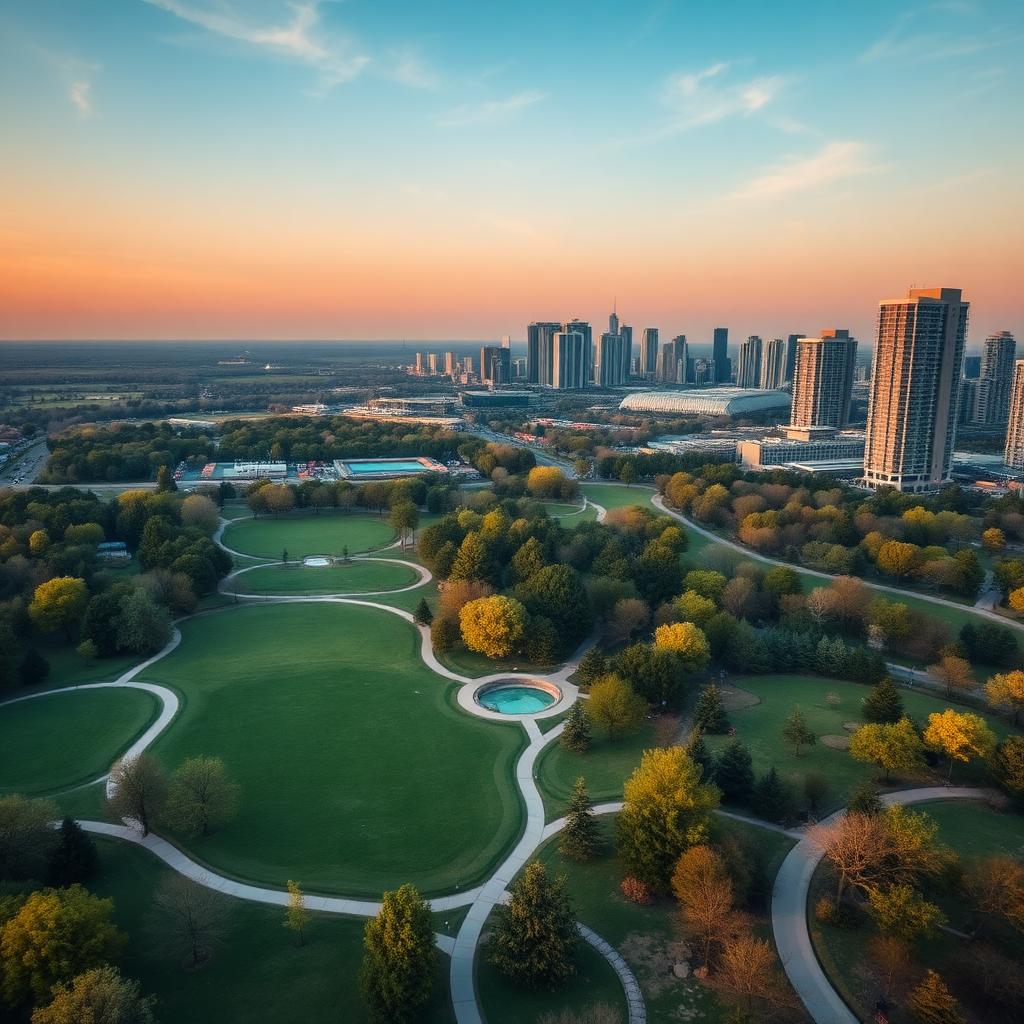
A neighbourhood in the middle of becoming something.
Downsview Park sits on one of the largest undeveloped land reserves in Toronto's urban core. What's here now is already genuinely livable. What's coming over the next decade makes it one of the most interesting places to own in the city.
What Downsview Park Is
Downsview Park is a neighbourhood in North York built around one of the largest urban parks in Toronto — a 572-acre federally owned green space that anchors the whole area. The land has a layered history: Indigenous territory, a 19th-century farming community, a Second World War military base, and most recently the home of Bombardier's aircraft manufacturing operations before the company's departure in the 2010s.
That departure is what set the current transformation in motion. Canada Lands Company, a federal Crown corporation, now controls the majority of the land and has been leading a master-planned redevelopment that Toronto City Council formally approved through the Downsview Secondary Plan in 2024. The plan covers the next 30 years and establishes this area as the site of the largest transit-oriented development in the city's history.
What that means for people living here now: the neighbourhood feels quieter and more spacious than comparable areas closer to downtown. The park is genuinely accessible, the buildings are newer, and the community is still forming its identity. For buyers and investors, the combination of current affordability and long-term infrastructure investment is the core of the value proposition.
Getting Around
Line 1 Yonge-University subway stop directly at the neighbourhood's edge. Direct service downtown to Union Station in under 30 minutes. Spadina and Bloor-Yonge connections available without transferring.
Downsview Park GO Station serves the Barrie corridor with service to Union Station. The station is integrated with the TTC subway stop making it one of the better-connected transit hubs in the city.
Allen Road (Highway 400 extension) runs along the neighbourhood's western edge with direct access to the 401 and 400. Downtown driving time is 20-25 minutes outside peak hours.
65% of the Downsview West District's planned population will be within 500m of the TTC and GO station — transit access is central to how this neighbourhood is being designed.
The Park Is the Point
Downsview Park itself covers 572 acres — for context, that is larger than Central Park in New York City. Unlike most urban green spaces that are primarily passive, Downsview Park runs active programming year-round including concerts, markets, sports fields, cycling paths, and community events. The Merchants' Market runs regularly in the Depot building on site, drawing vendors and visitors from across the city.
Beyond the main park, the neighbourhood has Downsview Dells Park, Chalkfarm Park, and a network of smaller green spaces within walking distance. The planned Downsview West District will add approximately 9.4 acres of new parks and open space as development phases proceed, along with an 800-metre Ancestors' Trail weaving Indigenous cultural history through the district.
For residents of buildings like Saturday at Downsview, the park is essentially a backyard. The park-side building exposure that commands a price premium in this building is a direct reflection of that access.
For Families
Downsview is a family-oriented neighbourhood. Approximately 85% of residents are under the age of 65 and families with children are the most common household type. The area has a high proportion of children under 14 which is reflected in the number of schools and playground facilities in the immediate area.
Current schools serving the area include a mix of TDSB public schools, Catholic schools, and private options within the broader North York area. The planned Downsview West District includes a new TDSB elementary school as part of its community amenities phase, along with three new daycares, which will meaningfully increase local capacity as the neighbourhood's population grows.
The planned community recreation centre at 1377 Sheppard Avenue West — a 79,000 square foot facility targeting net-zero emissions — is currently in development and will serve the neighbourhood as one of its primary community infrastructure investments.
Day to Day
Day-to-day amenities in the area include the North York Sheridan Mall along Wilson Avenue, Downsview Arena, Toronto Public Library branches, and a mix of independent restaurants and grocery options. The commercial retail currently skews toward independent operators rather than chains, reflecting the neighbourhood's diverse and multicultural character — a mix of languages and cuisines that gives the area a distinctly local feel compared to more gentrified parts of the city.
The Depot building at 40 Carl Hall Road — a repurposed Cold War-era military warehouse — currently hosts film studios, the Merchants' Market, and various community uses. Under the Downsview West District plan it will be partially retained and enhanced as a mixed-use anchor for the district's commercial and cultural programming.
The Oakdale Golf and Country Club on the neighbourhood's western edge is one of the area's more distinctive amenities, offering a private golf experience that is unusual for an urban location of this density.
What's Coming
The Downsview Secondary Plan, adopted by Toronto City Council in 2024, is the formal blueprint for what this neighbourhood becomes over the next 30 years. The scale of planned investment is significant and directly relevant to anyone buying property here today.
8,800 new homes across 74 acres adjacent to the park and TTC/GO station. Approved and in active development. Includes 20% affordable housing, one new school, three daycares, 9.4 acres of new parks, and 269,000 sq ft of retail. Targeting net-zero operational emissions by 2040.
4,000 units on 25 hectares anchored by a protected mature woodlot. First phase of 1,700 homes approved. Mix of market, affordable, and seniors housing. Two new public parks included in the plan.
New 79,000 sq ft facility at 1377 Sheppard Avenue West currently in development. Targeting net-zero emissions. Will serve as the primary community recreation hub for the growing population.
The Downsview Park TTC and GO Station interchange is positioned as the northern gateway to the entire district. The station's centrality to both the subway and GO Barrie line makes it one of the better-connected transit nodes in the city outside of Union Station.
The combination of approved plans, federal land ownership, and direct transit access makes Downsview Park one of the more structurally sound long-term holds in Toronto's condo market.
What the Market Looks Like
Housing in Downsview is priced below comparable neighbourhoods closer to downtown, which reflects both its current stage of development and the perception gap between where it is now and where the approved plans suggest it is heading. For buyers who want newer construction, genuine green space access, and direct subway connectivity without paying Midtown prices, the area represents one of the more rational value propositions in the current Toronto market.
Investors holding units in this area are generally doing so on a longer horizon — the infrastructure investment timeline runs 10 to 30 years. The short-term rental market is solid given the transit access and park proximity. The lease market is active and consistently absorbs new units without extended vacancy periods.
I'm a realtor who lives in the Downsview neighbourhood and have been tracking its development closely for years.